Cultural Management
When we introduce ourselves as a “sociocultural enterprise,” people usually respond with puzzled looks. We work in the fields of “Cultural Heritage Management” and “Cultural Management.” But what do these definitions actually mean?
Definitions
According to UNESCO, Cultural Heritage Management (CHM) is the systematic practice of preserving, protecting, promoting, and properly utilising elements of cultural heritage -both tangible and intangible- in order to safeguard their value for present and future generations. This is achieved through participatory governance, legal frameworks, administrative structures, and resource planning.
At the same time, Cultural Management (CM) refers to the planning, organisation, and supervision of activities related to cultural heritage and the creative industries. It includes the protection, enhancement, and preservation of cultural heritage, while also addressing the creative economy, cultural policy, and international cooperation.
Both CHM and CM are professional fields within the humanities and the Cultural and Creative Industries (CCI). The truth is, our profession is highly multifaceted, demanding, and essential, especially nowadays. It involves the constant coordination of multiple roles, as our work draws on tools and methodologies from a variety of disciplines: archaeology, social research, education, project management, participatory practices, marketing, artistic production, and contemporary cultural strategy.
Past – Present – Future
As a team, we are not only concerned with preserving cultural heritage, but also with how it can be engaged into the present. That is why we combine the principles of CHM and CM.
Indicatively, our work includes:
- Studying and designing activities that highlight monuments, narratives, traditions, and local stories.
- Developing participatory cultural experiences, such as interactive programmes, creative workshops, or oral history projects.
- Engaging the local community in showcasing the identity of a place.
- Collaborating with museums, artists, researchers, and educators to produce new cultural formats.
- Utilising funding tools to support sustainable innovation in cultural management.
Culture means experience
From this perspective, Managing Culture plays a vital role in:
- cultural education and artistic expression
- community empowerment and social cohesion
- sustainable development, cultural tourism, and innovation
- cultural policy-making and advocacy
Within this context, professionals in the field hold crucial and multifaceted roles. Without strategic management, even the most impressive monument or the most innovative initiative risks being lost, commercialised, or simply forgotten.
A Call to Action
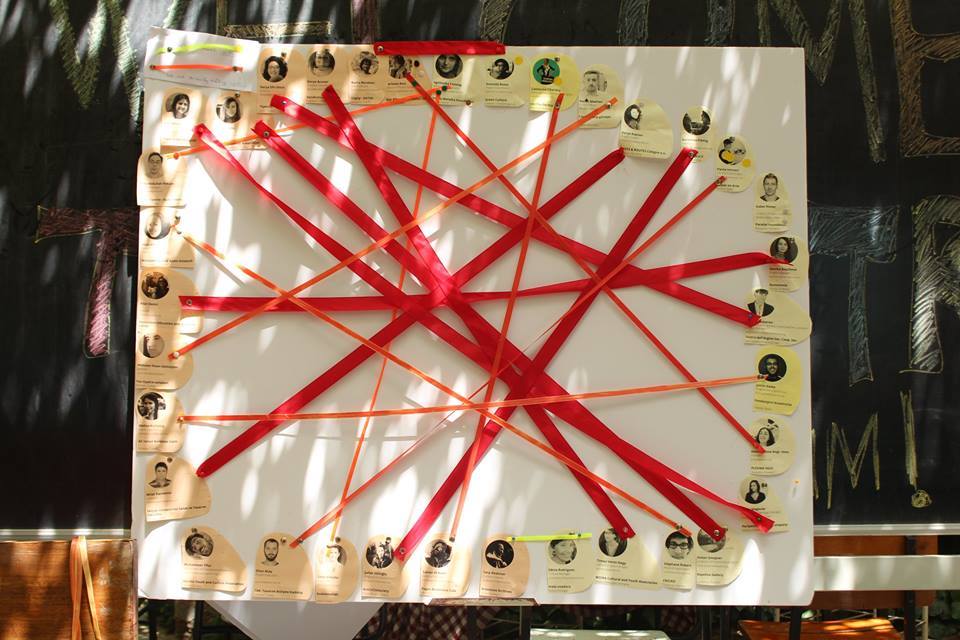
We work together with many fellow professionals to ensure that our cultural heritage is not just something to “admire,” but something to understand, respect, and experience. Culture demands empathy, knowledge, and collective care.
If you’d like to learn more about how we design human-centred culture, follow us on this journey!