
Community Engagement
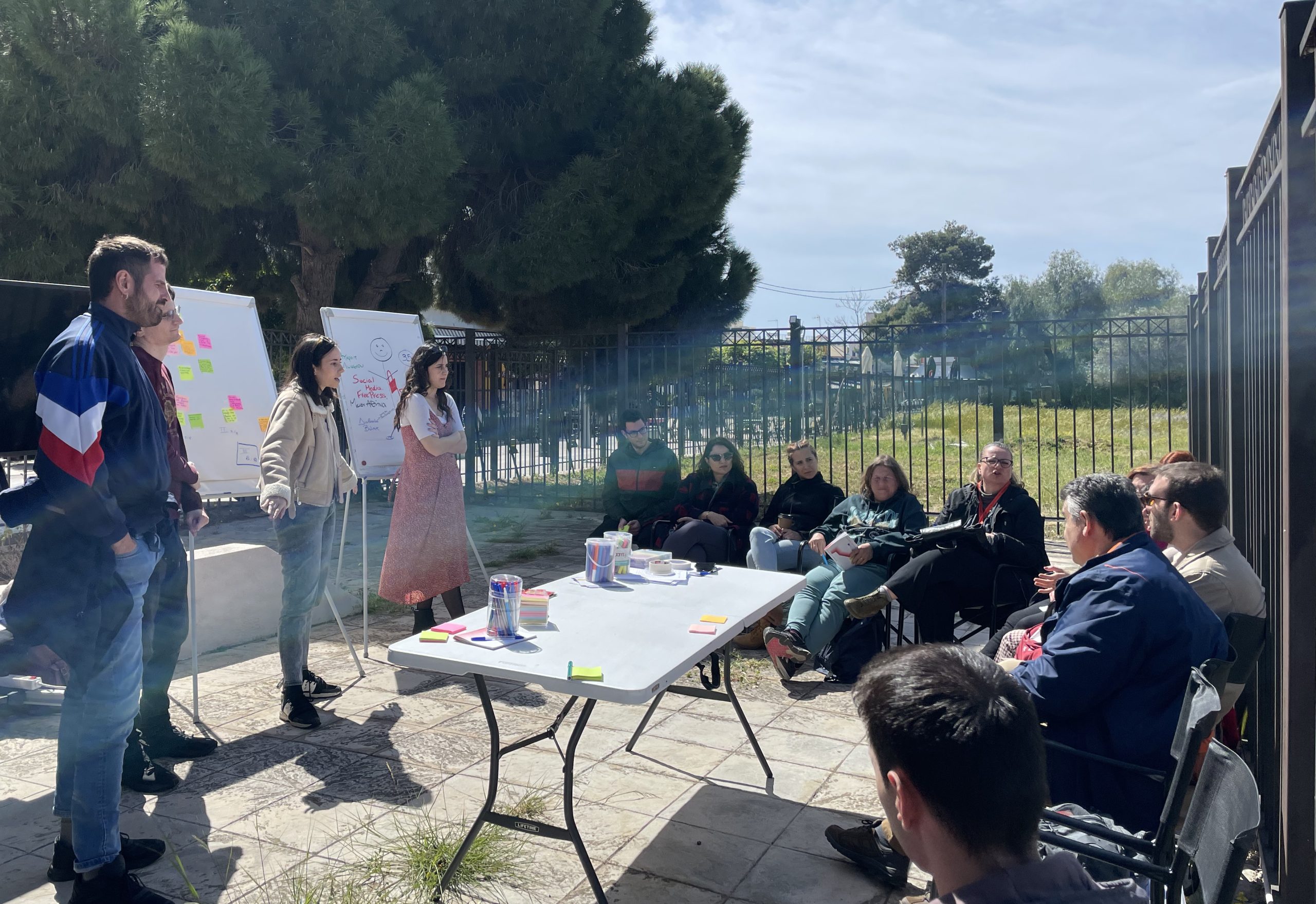
For us, every project starts and ends with the community. We believe in the power of people to shape their environment, in sharing experiences and in co-designing solutions that respond to real needs. Participation is not a “phase” of the project – it is the thread that runs through it from beginning to end.
Co-creation, not representation
We provide the space, tools, and time for communities themselves to express their voices. For us, participation means co-design, active presence, dialogue, and mutual learning. It means allowing space for the unpredictable, making room for voices that are usually left on the margins, making the process “slower”, but more meaningful.
Every community is unique
We recognise the uniqueness of each place, each group, each context. We work with people to create actions that reflect their everyday lives, their own knowledge, their own priorities, without applying “ready-made” solutions. This process builds trust and ensures that the outcomes of our projects have real impact and lasting value.
Why does it matter?
Because projects designed without the involvement of their target audience often fail. Because participation is not only a matter of democracy, it is also a matter of quality. Because knowledge does not belong exclusively to “experts”. It also exists in homes, on the streets, in informal networks, in shared stories, and in needs that are (not) heard.
Building collectively
Community participation is not a “tool”, it is an outlook. It is the belief that the most powerful and lasting outcomes are achieved through collaboration in the design, learning, testing, and moving forward processes.

Mystery 68 Stalker
Perhaps our most significant project, with clear and substantial community involvement, is Mystery 68, which we implemented as part of the 2023 Eleusis European Capital of Culture.
Typically, people working in the cultural sector visit a place, conduct secondary and, where needed, primary research, and then design and deliver a walking tour, a city game, etc., for visitors to the area. At some point, we realised that no matter how thorough our primary research was, no matter how much we tried to convey the local identity to the visitor, we weren’t actually creating space for the voices of the local community to be heard, nor were we building real bridges between those who live in a place and those who visit it.
In response to this concern, we developed “Walking experiences’ participatory design”: a methodology that combines elements of ethnographic research, artistic practices, participatory processes, and service design. It aims to support local community members in taking an active role in the design and narration of walking experiences, so that public space becomes a living, creative place of expression.
Artemis & Diana
A different example of community engagement comes from the “Artemis & Diana” project, which aimed to empower women on personal and professional levels, through tailored workshops. These workshops focused on developing skills related to local cultural and natural heritage, as well as entrepreneurship. Although most of the sessions were led by professionals from each respective field, the most important “lesson” came from the process of sharing and exchanging the knowledge that the women themselves already held. After mapping their existing knowledge and identifying their needs, we “handed over the reins,” allowing a different participant in each session to share her own skills or expertise with the group. As part of the project, we coordinated the activities and supported the women with the aim that they could continue this practice independently in the future.