

Yannis Varvaresos was born in Thessaloniki in 1989. He is a PhD Candidate (PhD) at the University of Western Macedonia, Department of Visual and Applied Arts, with the subject “Collective Body and Public Space”. In addition, in 2022, he conducted the MA “Performing Public Space” of Fontys University (Tilburg, Netherlands), receiving distinction (Cum Laude), for his research project “Peripatetic (Dis)Courses”. He is a graduate of the MA of the Department of Theater, School of Fine Arts, Aristotle University of Thessaloniki, majoring in “Directing-Acting”; the Higher School of Drama, “Andreas Voutsinas”; and the Department of Electrical and Computer Engineering (Aristotle University of Thessaloniki). He has also received the award for best actor in the short film category (CineMAZ – Festival Internacional de Cinema Independente) – for the short film “Hunting Season”, directed by Dimitris Theocharidis (2022).
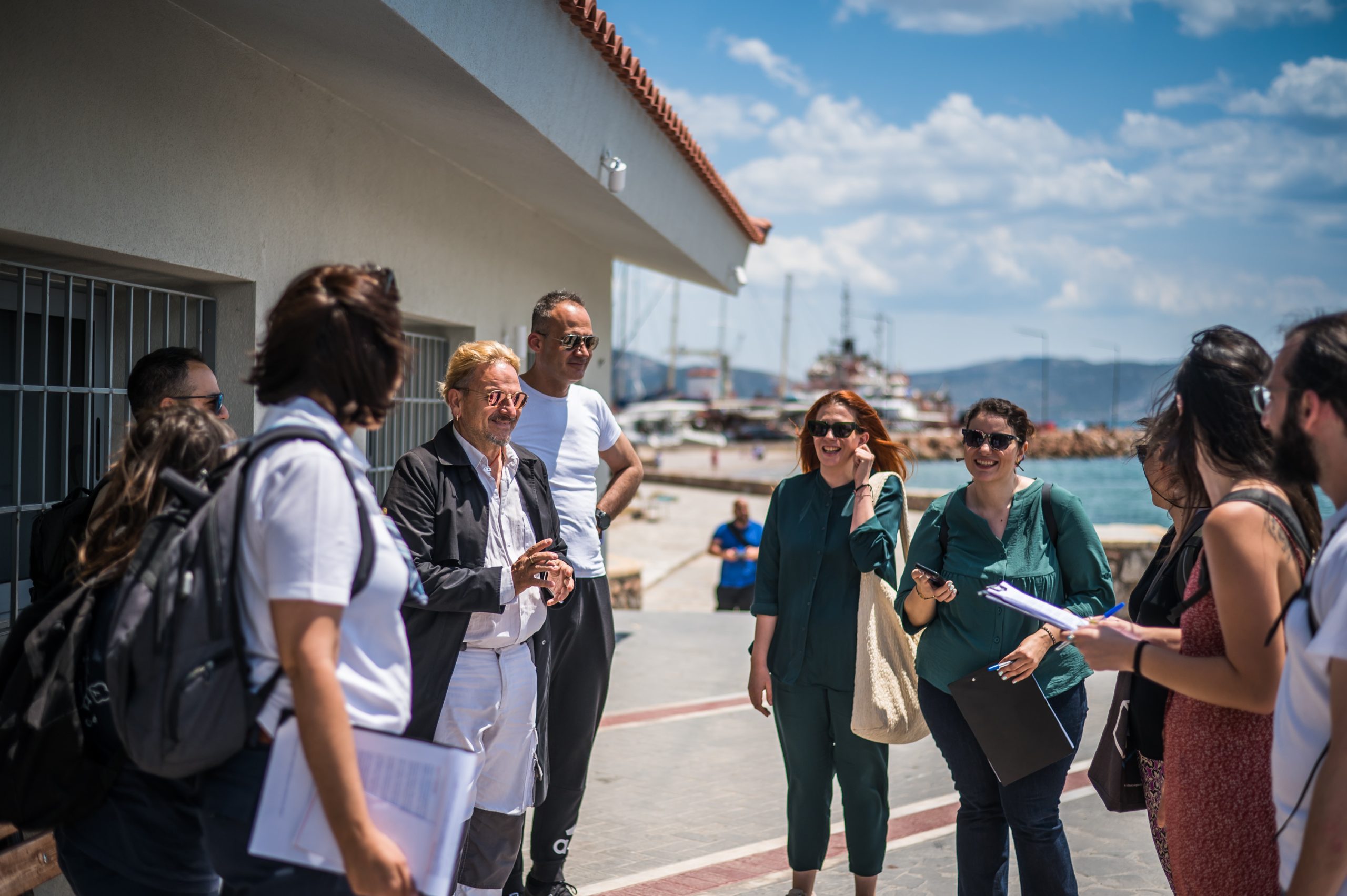
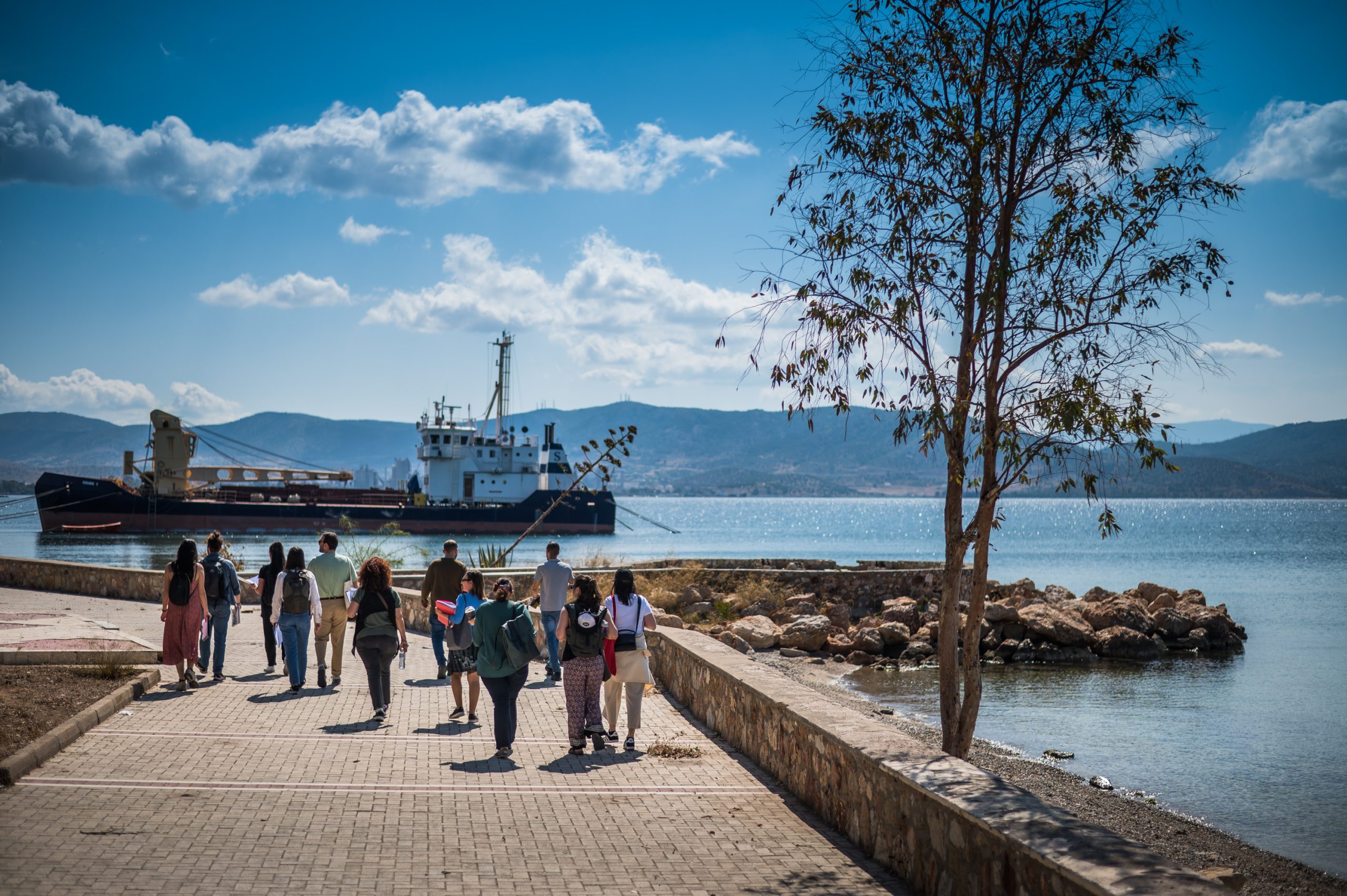
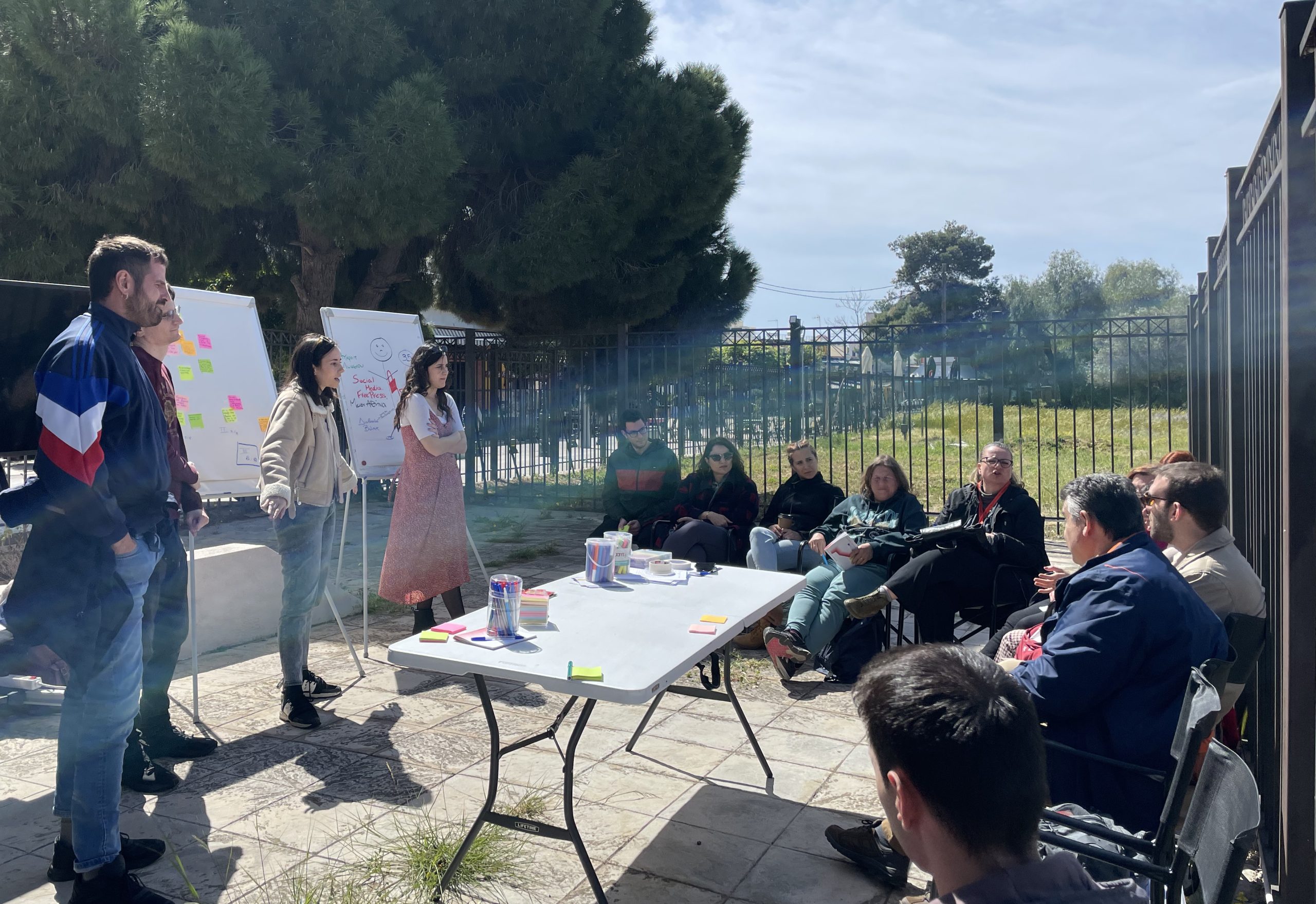
In Mystery 68 Stalker offered workshops with various tools, the methodology, and plenty of examples of Performative Walks.

Kostas Thomopoulos is a graduate of the Geology Department of the University of Patras, with an MA in Environmental Oceanography and training in Environmental Education and Adult Education (National and Kapodistrian University of Athens). From 2011 to 2016, he worked in Secondary Education as a Geology-Geography teacher and was in charge of environmental activities, implementing approved environmental education programmes in a multitude of subjects. Since 2017, he has been in charge of Educational Programmes and volunteering at MEDASSET, while at the same time, he collaborates with schools, foundations, and educational institutions of Athens and the region, for the design and implementation of educational programmes.
In Mystery 68 Stalker, he was responsible for the scientific curation of the environmental walk.

Ernestina Karistineou – Efthimiatou was born in Athens and grew up on the island of Naxos. She studied architecture (Department of Architecture-University of Patras, 2012), and currently is a Ph.D. candidate at the National Technical University of Athens, School of Architecture (Department III Architectural Language, Communication and Design), on the subject of “Photographic Representations of exile: body and space”. She holds an MA degree in “Architectural Design-Space-Culture” from the National Technical University of Athens. She has worked as a freelance architect, as a children’s educator on architectural heritage, and has been a teaching assistant in the School of Architecture.
In Mystery 68 Stalker, she was responsible for the scientific curation of the walk dedicated to the industrial heritage of Elefsina.
Dimitris Megalios is an audiovisual and performing artist. He is a certified graphic designer and illustrator, and for the past 15 years, he has been a permanent collaborator of a publishing house, where he illustrates educational books for children. In addition, he works as a freelance graphic designer for the past 20 years. Meanwhile, music is his passion, with classic and rock music being his favourites. The combination of those is the core of his compositions. He participates in three bands, while, in 2014-2019, he participated in the theatrical group «Θεartίστες» as an actor, and as a composer for the plays, as well. For the composition and the musical direction of the theatrical play “The Gazebo” (Alec Coppel), he was awarded, in 2017, at the Amateur Theater Festival of Heraklion, Crete.
In Mystery 68 Stalker, he undertook the development of the graphic-promotional material for the routes.
Foivos Michos Rammos grew up in Pelion and studied History and Archeology in Athens, majoring in Archeology and History of Art, in the Department of Philosophy of the National and Kapodistrian University of Athens. He holds a postgraduate diploma from the Autonomous University of Madrid in Cultural Management and Field Archaeology, and he is a certified Tour Guide after attending the Accelerated Training Programme in the profession of Tour Guide from the University of Macedonia. He is also a graduate of the drama school of the New Hellenic Theater G. Armeni. He has attended and taken part in Greek and international archaeological conferences. For the past years, he has been working as an archaeologist, tour guide, and actor.
In Mystery 68 Stalker, he offered workshops on the basic principles of tour guides and was the scientific expert for the archeology-history route of Elefsina.

Caterina Moroni is an Italian interdisciplinary and independent artist and a cultural & social activist. She is focused on art in public and unconventional spaces and on participatory processes. Graduated in Communication and Business Management, she attended the European Professional School for actors directed by Socìetas Raffaello Sanzio (2007- 2008). She has been cooperating as an artist, project manager, and Outdoor & Experiential Educator with many cultural and social organisations and places dedicated to theatre research and to educational and ecological practices. In 2008, she started her personal creative research project, and her performances have been presented in several national and international festivals.
In Mystery 68 Stalker, she guided the children of Elefsina to create their own performative experience, a poetic riot, entitled Bloom&Doom.

Fanni Nánay from the Artopolis Cultural Association was born in Budapest, studied Hungarian and Polish Philology (MA / BA) and cultural anthropology (MA) at the Janus Pannonius University in Pécs, Hungary, as well as theatre studies (PhD) at the Jagellonian in Kraków, Poland. In her thesis, she focused on Polish companies and events working on the borderline of theatre and non-theatre (religion, politics, community). Her interests in art led her to a deeper involvement in site-specific and art in public space, and in 2008, she founded PLACCC International Festival of Site-specific Art and Art in Public Space, and she has been the artistic director and curator of the festival since its beginning.
In Mystery 68 Stalker, she offered workshops in order to train / inspire all collaborators, via tools and methodology for more meaningful communication and collaboration with the local community.

Ioanna Lioutsia was born in Thessaloniki, in 1992. She is a PhD candidate in “Performance Arts in the Balkans” (University of Peloponnese). She holds an MA in Directing (Theatre department, AUTh, 2018), is a graduate of the Contemporary Theatre Drama School (2017), and has a BA in History & Archaeology (AUTh, 2014). She works as an actress, director, and Drama in Education instructor.
She participated in Mystery 68 Stalker as cultural mediator, alongside Caterina Moroni, where they guided the children of Elefsina to create their own performative experience, a poetic riot, entitled Bloom&Doom.